This article describes how researchers identify and measure the frequency of concepts in text captions and in images within pretraining datasets for artificial intelligence models, and how that information helps evaluate data quality and alignment.
In the textual modality, natural language processing tools are used, including tokenization, lemmatization, entity recognition, and embedding models to extract and normalize concepts. These techniques make it possible to count mentions of objects, actions, properties, and entities in millions of captions, detecting biases, repetitions, and semantic gaps.
For the visual modality, image labeling and detection models such as RAM++ are used to generate labels, bounding boxes, and visual descriptions. These labels are processed to create a visual vocabulary comparable to the textual vocabulary through normalization, synonym mapping, and the use of ontologies that associate textual terms with visual concepts.
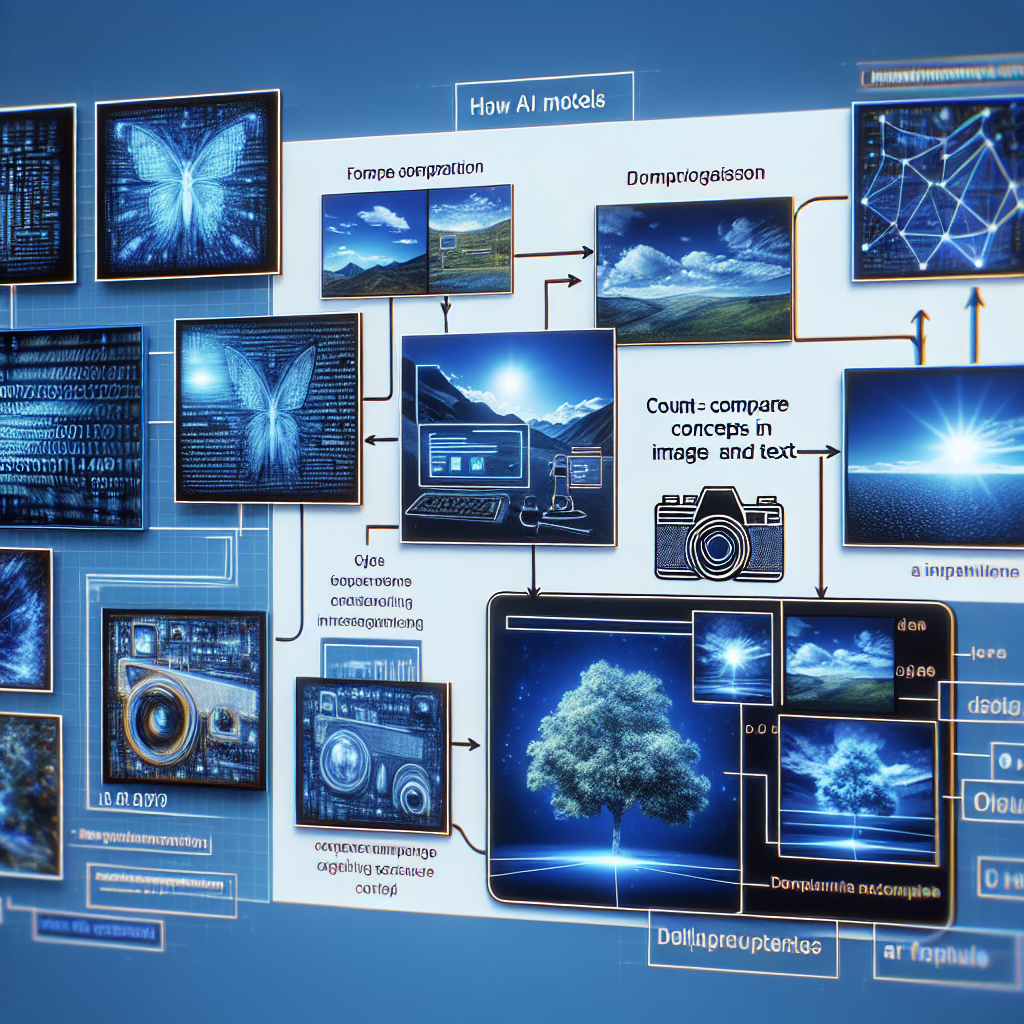
The critical step is calculating paired frequencies: for each concept, the frequency in captions and the frequency in visual labels are obtained, and metrics such as correlation, co-occurrence rate, and relative discrepancy are compared. Discrepancies indicate alignment issues between language and vision, for example concepts frequently mentioned in text but poorly represented in images, or vice versa.
Identifying these mismatches makes it possible to uncover data quality issues such as noisy labels, class imbalances, cultural biases, and redundancies. Solutions include stratified sampling, data cleaning, human relabeling, synthetic augmentation, and preprocessing strategies that balance critical concepts for downstream tasks.
Additionally, researchers often combine automatic methods with human reviews and practical utility metrics: evaluating how differences in frequencies affect the accuracy of multimodal models, robustness to domain shifts, and the ability to generalize to real-world scenarios.
From an engineering and business perspective, a concept and frequency audit helps design more responsible and efficient data pipelines for developing artificial intelligence solutions in companies. Q2BSTUDIO brings expertise to this complete cycle: we are a custom software and application development company, specialists in artificial intelligence and AI for businesses, with cybersecurity services and consulting in AWS and Azure cloud services.
At Q2BSTUDIO, we combine expertise in custom software and custom applications with capabilities in business intelligence services, AI agents, and Power BI to offer solutions that optimize everything from data ingestion and labeling to secure and scalable cloud deployment. Our approach integrates data quality control practices, reproducible pipelines, and text-image alignment audits to minimize risks and improve the performance of multimodal models.
Keywords for search engines and clients: custom applications, custom software, artificial intelligence, cybersecurity, AWS and Azure cloud services, business intelligence services, AI for businesses, AI agents, Power BI. If you need a data audit, a custom project, or want to integrate AI agents and business intelligence solutions with cloud security, Q2BSTUDIO is ready to advise and execute.
In summary, counting and matching concepts between text and image is an essential practice to ensure balanced and useful pretraining data. By applying NLP techniques, visual labeling models such as RAM++, and quality processes, it is possible to detect inconsistencies and prepare robust datasets that drive better models and business solutions.