.jpg)
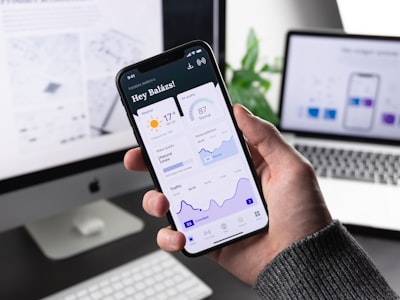
The digital transformation of companies not only seeks to optimize internal processes, but also to align with sustainability goals and reduce operational costs. In this context, the question arises: can an intranet with an innovation funnel improve energy efficiency? The answer is yes, provided it is designed as an intelligent platform that integrates data, automation, and predictive analytics. A modern intranet goes beyond being a document repository; it becomes a control center where IoT sensors, measurement systems, and automated workflows converge. By combining artificial intelligence with an innovation funnel, organizations can identify consumption patterns, anticipate demand peaks, and activate corrective measures in real time. This approach allows, for example, a unified dashboard to display consumption by floor, product, or equipment, while AI agents propose savings actions without constant manual intervention.
To achieve this level of integration, it is essential to have custom applications that connect legacy systems with new analytics tools. Generic solutions rarely cover the particularities of each business, while custom software allows capturing specific data from energy sensors, ERP, and management platforms. Furthermore, implementing AI for businesses requires a robust and secure cloud infrastructure. Therefore, AWS and Azure cloud services offer the necessary elasticity to process large volumes of information without compromising availability. Q2BSTUDIO, as a technology partner, designs corporate intranets that include an innovation funnel focused on energy efficiency, combining process automation, business intelligence, and cybersecurity. Its engineers integrate power bi dashboards to visualize consumption KPIs, and deploy AI agents that learn from historical patterns to recommend adjustments in HVAC or machinery.
A key aspect is the cybersecurity of these systems, as connecting sensors and cloud platforms increases the attack surface. Q2BSTUDIO applies security protocols such as VPN tunneling and Azure private endpoints, ensuring that sensitive energy consumption data travels encrypted. Likewise, business intelligence services allow transforming that data into actionable reports for management. For example, a dashboard can alert when a production line exceeds the expected consumption threshold, and automatically trigger a maintenance order. This type of automation reduces errors and frees teams from repetitive tasks. Companies adopting this model report operational reductions of up to 35% in target workflows, according to trends observed in 2026.
The innovation funnel within the intranet acts as a mechanism to capture efficiency ideas, prioritize them, and bring them into production. Q2BSTUDIO implements discovery and MVP phases in 4 to 8 weeks, integrating systems like SAP, Salesforce, or Microsoft Teams without needing to replace them. Additionally, the platform is delivered with a web portal where the client can configure AI prompts, monitor costs, and manage workflows without depending on IT. This democratizes the use of artificial intelligence and accelerates adoption. The free discovery sessions offered by Q2BSTUDIO allow executives and sustainability managers to explore how an intranet with an innovation funnel can transform their energy strategy, with measurable results from the first months.